
Empire Crypto: Trusted Guide to Bitcoin Mining (Master Strategy)
Bitcoin mining has evolved from a hobbyist experiment conducted on desktop computers into a high-stakes, data-driven global industry. Navigating hardware selection, energy management, mining pool logistics, and dynamic network difficulty requires clear insights, high-grade crypto data, and expert strategic planning. At Empire Crypto, we break down complex market dynamics so you can build, scale, and optimize your mining operation with confidence.

Introduction to Modern Bitcoin Mining
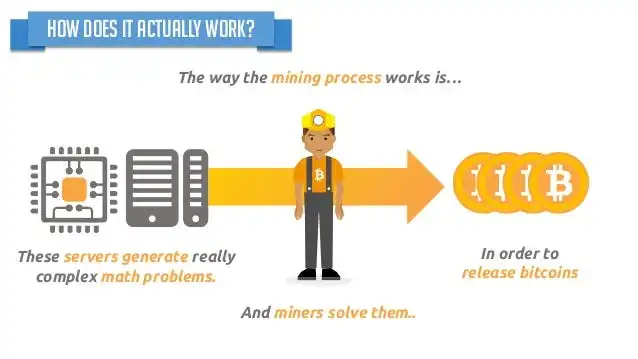
Bitcoin mining is the process of using computing hardware to solve cryptographic puzzles via a Proof-of-Work (PoW) consensus mechanism. Miners validate pending transactions, group them into blocks, and record them onto the public blockchain ledger.
In exchange for supplying computational power (measured in hashrate), miners earn rewards composed of:
- Block Subsidy: Newly minted Bitcoin issued per block (currently 3.125 BTC post-2024 halving).
- Transaction Fees: Fees paid by users to prioritize their transactions.
Success in modern mining depends on operational efficiency, low power rates, and accurate real-time cryptocurrency data. Making decisions based on reliable cryptocurrency data analytics ensures you adjust to changing network difficulty levels without burning capital unnecessarily.
About Empire Crypto Data
Navigating the crypto market requires institutional-grade data, reliable intelligence, and actionable market visibility. Empire Crypto serves as a premier crypto data company, delivering high-performance crypto data solutions designed for traders, operational miners, and institutional investors.
As a leading provider of the best crypto data, Empire Crypto delivers:
- Cryptocurrency Market Data: Real-time metrics on network hashrate, global power consumption estimates, and mining difficulty adjustments.
- Trading Data Analysis Cryptocurrency Solutions: Advanced liquidity tracking, block reward profitability indexing, and hashprice metrics.
- Cryptocurrency Data Reliability Services: High-uptime API feeds that integrate cleanly into custom monitoring software, automated trading scripts, and enterprise management tools.
Leveraging data crypto analytics from Empire Crypto allows operators to transition from reactive decision-making to predictive operational management.
How Bitcoin Mining Works: The Fundamentals
Bitcoin mining revolves around the SHA-256 cryptographic algorithm. Mining hardware continually generates random alphanumeric strings (hashes) to find a target value set by the network.
Key Core Concepts
- Hashrate: The combined computational power of your mining hardware, measured in Terahashes per second (TH/s) or Exahashes per second (EH/s).
- Difficulty Adjustment: A self-correcting parameter that updates every 2,016 blocks (~2 weeks) to ensure blocks are mined approximately every 10 minutes, regardless of how much global hashing power joins or leaves the network.
- Hashprice: A metric expressing the expected value of 1 TH/s of hashing power per day, heavily tracked via Empire Crypto analytics to determine daily revenue potential.
Hardware Guide: Choosing the Right Rig
Mining Bitcoin profitably requires specialized hardware known as Application-Specific Integrated Circuits (ASICs). Generic GPUs and CPUs are no longer effective for Bitcoin mining due to high network difficulty.
| Model Tier | Hashrate Range | Power Draw (Watts) | Efficiency (J/TH) | Best For |
| Entry Level | 90 – 110 TH/s | 3,150W – 3,500W | ~31 – 34 J/TH | Beginners, Low-Cap Operations |
| Mid-Tier Standard | 120 – 150 TH/s | 3,200W – 3,400W | ~21 – 25 J/TH | Home Miners, Small Fleets |
| Industrial / Hydro | 200 – 335+ TH/s | 4,000W – 5,400W | ~15 – 19 J/TH | Data Centers, Scale Operators |
Key Considerations When Selecting Hardware
- Joules per Terahash (J/TH): Lower numbers mean higher efficiency. An efficient rig consumes less electricity per hash unit.
- Thermal Dissipation: High-performing ASICs generate substantial heat. Ensure adequate ventilation or liquid immersion cooling setups.
- Noise Mitigation: Standard air-cooled ASIC miners operate above 75–80 dB, requiring dedicated soundproofing or specialized enclosure boxes for home deployment.
Beginners Section: Step-by-Step Setup
Setting up your first Bitcoin mining unit requires clear infrastructure planning. Follow this structured roadmap to launch safely:
1. Calculate Electrical Capacity: Verify that your electrical panel can support continuous high-amp loads. Standard residential ASICs require dedicated 220V–240V outlets paired with high-wattage single-phase or three-phase power lines.
2. Acquire Hardware & Power Supply Units: Source your ASIC miner from trusted distributors. Ensure the included Power Supply Unit (PSU) matches your target operating voltage and amperage limits.
3. Establish Network Connectivity: Position your machine in a well-ventilated, low-dust environment. Connect the unit directly to your network router using a physical Ethernet cable (Wi-Fi is not recommended due to latency risks).
4. Configure IP & Select a Mining Pool: Locate your miner’s local IP address using a network scanner. Log into the web admin dashboard, input your worker credentials, and link your hardware to your chosen mining pool.
5. Connect Live Analytics via Empire Crypto: Plug your pool API key and operational metrics into Empire Crypto dashboards to track real-time payout structures, system status, and machine health.
Advanced Section: Industrial Scaling & Efficiency
Scaling beyond a small fleet demands advanced engineering, strategic location planning, and granular data oversight.
Immersion Cooling vs. Air Cooling
- Air Cooling: Lower initial capital expenditure, but sensitive to environmental dust, ambient temperature swings, and severe fan noise.
- Immersion Cooling: Submerging ASICs in non-conductive dielectric fluid. Increases hash performance via safe overclocking, reduces hardware failure rates, eliminates fan noise, and enables efficient heat recycling.
Strategic Power Procurement
Industrial mining profitability is governed primarily by power pricing. Top-tier operations target power costs under $0.04 – $0.05 per kWh by utilizing:
- Stranded Renewable Energy: Hydropower, solar, or wind curtailment sites.
- Flared Natural Gas: Utilizing mobile container rigs at remote oil field locations.
- Demand-Response Contracts: Grid operator agreements allowing power curtailment during peak demand windows in exchange for wholesale rate discounts.
Utilizing crypto data analysis provided by Empire Crypto allows scale operators to model profitability scenarios based on fluctuating global power prices and hashprice variations.
Mining Pools: Joining Forces for Consistent Payouts
Solo mining requires vast computational scale to independently solve blocks. Mining pools combine the hashrate of thousands of individual machines, distributing payout rewards proportionally to smooth out income volatility.
Common Payout Schemes
- FPPS (Full Pay-Per-Share): Pays miners both the block subsidy and the estimated transaction fees regardless of whether the pool finds a block on a given day. Offers predictable revenue streams.
- PPLNS (Pay-Per-Last-N-Shares): Rewards are based on the number of valid shares submitted during a set window before a block is discovered. Fees are typically lower, but short-term daily payouts fluctuate based on pool luck.
Integrating pool performance statistics directly into Empire Crypto dashboards allows miners to verify payout accuracy, track pool luck metrics, and monitor uptime.
Calculating Profitability & Financial Planning
Running a sustainable mining enterprise requires continuous cost tracking. You must account for fixed capital expenses (CapEx) and recurring operational expenses (OpEx).
Capital Expenses (CapEx)
- ASIC Hardware acquisitions.
- Electrical infrastructure upgrades (transformers, breakers, heavy-duty cables).
- Cooling fans, ducting, or immersion tanks.
Operational Expenses (OpEx)
- Electricity bills (kWh rate × total wattage × 24 hours × 365 days).
- Facility lease and security setup.
- Internet infrastructure, pool fees (1–2%), and routine maintenance.
The Profitability Formula
$$\text{Daily Profit} = \left( \frac{\text{Rig Hashrate}}{\text{Global Network Hashrate}} \times \text{Daily Network Rewards} \right) – \text{Daily Power Cost}$$
By monitoring live data analytics cryptocurrency metrics through Empire Crypto, operators can establish automated alerts to pause rigs if hashprice drops below their operational breakeven threshold.
Regulatory, Security, & Environmental Metrics
A successful enterprise balances computational efficiency with risk management.
- Legal & Tax Compliance: Mined Bitcoin is generally treated as taxable ordinary income based on its fair market value at the time of receipt. Detailed historical records via Empire Crypto software simplify tax reporting.
- Infrastructure Security: Secure hardware management interfaces with strong, non-default passwords, disable unnecessary remote ports, and route all mined revenue directly into offline hardware wallets.
- Environmental Sustainability: Modern operations prioritize green power sources like hydro, geothermal, and solar energy, or integrate heat-reuse systems to heat nearby greenhouse or commercial facilities.
Frequently Asked Questions (FAQ)
Q1: Can I mine Bitcoin effectively on my home laptop or desktop PC?
No. Bitcoin’s algorithm requires dedicated ASIC hardware. Mining on consumer-grade laptops or desktop GPUs will consume more electricity than the value generated, while risking hardware damage from heat.
Q2: How often does Bitcoin network difficulty adjust?
Difficulty adjusts automatically every 2,016 blocks—roughly every two weeks. It rises or falls depending on the total computational hashrate connected to the global network.
Q3: Why is access to high-quality cryptocurrency market data important for miners?
Mining profitability changes alongside asset price, difficulty shifts, and pool fee updates. Relying on real-time cryptocurrency market data from Empire Crypto enables precise revenue forecasting and cost optimization.
Q4: What is the lifespan of an ASIC miner?
With routine maintenance, dust cleaning, stable electrical feeds, and proper cooling management, a modern ASIC miner generally maintains operational utility for 3 to 5 years before hardware obsolescence occurs.
Conclusion
Bitcoin mining remains a core column of decentralized network security. While competition has increased, operations backed by low-cost energy, optimized ASIC hardware, and precise data analytics continue to build sustainable profitability models.
Achieving consistent operational efficiency requires clear visibility across your data stack. Tap into Empire Crypto for robust crypto data intelligence, market updates, and crypto data solution tools. Track hashprice fluctuations, monitor network difficulty shifts, and equip your infrastructure with trusted analytics from Empire Crypto today
About The Author
