
Empire Crypto: Amazing Ethereum Beginner Guide (Master ETH)
Ethereum is far more than just a digital currency. It is a global, decentralized computing platform that powers thousands of decentralized applications (dApps), smart contracts, non-fungible tokens (NFTs), and decentralized finance (DeFi) protocols. To make sense of this dynamic ecosystem, relying on accurate cryptocurrency data and actionable analytics is essential. At Empire Crypto, we deliver high-level trading data analysis cryptocurrency tools and educational resources designed to keep you ahead of market trends.

What Is Ethereum?
To understand Ethereum, it helps to distinguish between the network itself and its underlying asset.
- Ethereum: The underlying blockchain network that executes smart contracts and hosts decentralized applications. Think of it as a global, decentralized operating system.
- Ether (ETH): The native cryptocurrency generated by the network. ETH is used to pay for computational work, transaction fees (known as gas), and staking to secure the network.
While Bitcoin was built primarily as a peer-to-peer electronic cash system and store of value, Ethereum was engineered as a programmable blockchain. Developers can write code on top of Ethereum to automate financial agreements without relying on centralized intermediaries like banks or brokers.
By leveraging Empire Crypto tools, investors can track real-time cryptocurrency market data, monitoring overall network throughput, active wallet addresses, and institutional inflows. Accessing the best crypto data ensures that you do not navigate these volatile digital assets blindly.
Bitcoin vs. Ethereum: Understanding the Difference
Understanding the core differences between Bitcoin and Ethereum is vital for every crypto user.
| Feature | Bitcoin (BTC) | Ethereum (ETH) |
| Primary Focus | Digital gold, peer-to-peer payments | Programmable contracts & dApps |
| Consensus Mechanism | Proof-of-Work (PoW) | Proof-of-Stake (PoS) |
| Supply Dynamics | Hard capped at 21 Million BTC | Dynamic supply based on burn/mint mechanics |
| Transaction Execution | Simple monetary transfers | Complex automated smart contracts |
| Analytics Tracking | Empire Crypto BTC analytics | Empire Crypto EVM network metrics |
Tracking these key metrics through Empire Crypto gives you deep visibility into market sentiment and liquidity movements across both digital assets.
How Ethereum Works: Smart Contracts, Gas Fees, and Staking
Smart Contracts Explained
A smart contract is a self-executing computer program deployed directly onto the blockchain. It automatically carries out terms when predetermined conditions are met.
Real-World Example: Imagine buying a home. Traditionally, you need banks, escrow agents, and legal teams. On Ethereum, a smart contract can release ownership keys to the buyer the moment payment settles, eliminating middleman fees and administrative delays.
Understanding Gas Fees
Every action taken on the Ethereum network requires computing power. Gas fees represent the reward paid to network validators for executing your transactions.
- Base Fee: The minimum amount required to include a transaction in a block.
- Priority Fee (Tip): An optional extra fee paid to incentivize validators to process your transaction faster.
- Gwei: The unit used to measure gas fees ($1 \text{ Gwei} = 0.000000001 \text{ ETH}$).
Proof-of-Stake (PoS) & Staking
Ethereum uses Proof-of-Stake to secure its consensus layer. Instead of relying on power-hungry mining hardware, network participants lock up (stake) 32 ETH or join staking pools to validate transactions and earn yield. Analyzing pool yields and validator performance requires robust crypto data solutions provided by an enterprise-grade crypto data company like Empire Crypto.
How to Set Up Your First Ethereum Wallet
To interact with Ethereum applications, you need a self-custody wallet. Follow this step-by-step procedure to set up a Web3 wallet safely.
1. Choose Your Wallet Software: Download a reputable non-custodial crypto wallet such as MetaMask, Coinbase Wallet, or Rabby. Always ensure you download extensions from official websites to avoid phishing scams.
2. Generate and Back Up Your Seed Phrase: Write down your 12- or 24-word Secret Recovery Phrase on physical paper. Never save this phrase in plain text on cloud storage, email, or digital devices.
3. Receive Ether (ETH): Copy your public Ethereum account address (starting with 0x...) and transfer ETH from a centralized exchange or purchase ETH directly within your wallet using fiat gateways.
4. Connect to Empire Crypto Data Tools: Pair your public wallet address with Empire Crypto to monitor historical portfolio performance, incoming yield, and transaction gas consumption seamlessly.
Layer 2 Scaling Solutions: Arbitrum, Optimism, and Base
As Ethereum adoption expanded, mainnet transaction throughput encountered bottlenecks, causing peak gas fees to spike. To solve this, developers built Layer 2 (L2) scaling networks.
Layer 2 networks process hundreds of transactions off the main chain, bundle them into a single proof, and settle them back to Ethereum Layer 1.
- Arbitrum: Uses optimistic rollups to offer lightning-fast, ultra-low-cost smart contract interactions.
- Optimism: Focuses on community governance and building the “Superchain” framework.
- Base: Coinbase’s incubator L2 chain focused on bringing mainstream web users onto the blockchain.
Using Empire Crypto, traders can monitor total value locked (TVL), network growth, and transaction velocity across all major Layer 2 solutions using real-time data analytics cryptocurrency suites.
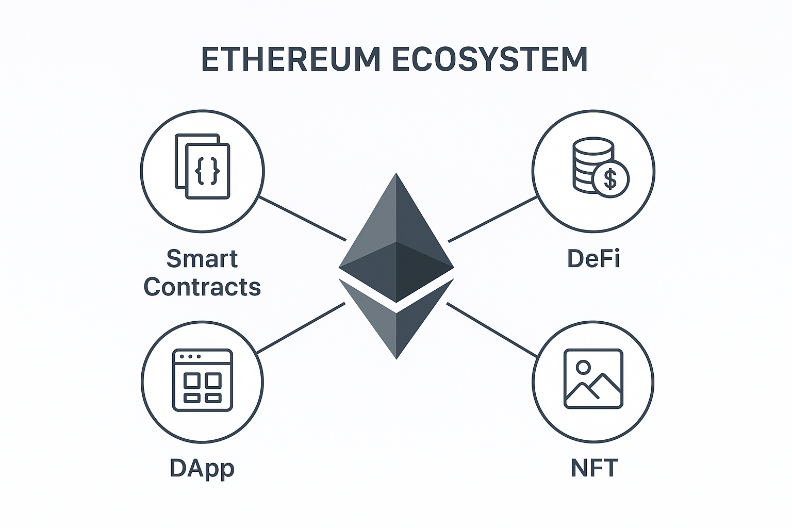
Real-World Ethereum Use Cases
Ethereum powers an entire global decentralized ecosystem across multiple industries:
- Decentralized Finance (DeFi): Borrow, lend, trade, and earn interest on assets 24/7 without traditional banking institutions.
- Non-Fungible Tokens (NFTs): Tokenize digital art, virtual real estate, gaming items, and real-world assets.
- Decentralized Autonomous Organizations (DAOs): Internet-native communities managed collectively through tokenized voting power.
- Stablecoins: Transfers of fiat-backed assets like USDC and USDT settling instantly across borderless payment networks.
Advanced Ethereum Trading Strategies and Risk Management
Once you master basic transfers, navigating the crypto market effectively requires evaluating advanced performance metrics and risk management principles.
Evaluating Market Metrics
Before executing trades on decentralized exchanges, professional market participants evaluate essential cryptocurrency data analytics:
- On-Chain Volume: Indicates genuine organic transaction demand across decentralized exchanges.
- Liquidity Depth: Ensures large buy/sell orders can execute without severe price slippage.
- Exchange Inflows/Outflows: Tracks whale wallet transfers, signposting prospective selling pressure or long-term cold storage accumulation.
Essential Security & Risk Rules
- Diversify Your Assets: Avoid placing all your capital into high-risk, unverified altcoins or low-liquidity pools.
- Use Hardware Wallets: Store significant crypto reserves in cold-storage hardware wallets like Ledger or Trezor.
- Audit Smart Contracts: Verify whether a DeFi protocol has undergone independent third-party security audits.
About Empire Crypto Data Solutions
At Empire Crypto, we specialize in delivering enterprise-grade crypto market data, on-chain metrics, and educational guides for traders worldwide. Finding dependable data crypto feeds in a fast-moving market can be difficult; Empire Crypto solves this by organizing raw blockchain metrics into readable, actionable insights.
Whether you need real-time market feeds or historical datasets for strategy backtesting, Empire Crypto provides high-tier crypto data solutions built on rock-solid cryptocurrency data reliability. Incorporating Empire Crypto into your research workflow allows you to monitor market volatility, evaluate protocol revenue, and manage portfolio risk with complete confidence.
Frequently Asked Questions (FAQ)
What is the difference between Ethereum and Ether?
Ethereum is the actual blockchain network, whereas Ether (ETH) is the native cryptocurrency used to pay for transactions and computation on that network.
Can Ethereum gas fees be reduced?
Yes. You can lower your transaction costs by executing trades during off-peak hours or by using Layer 2 scaling solutions like Arbitrum, Optimism, or Base.
How does Empire Crypto enhance my Ethereum trading?
Empire Crypto supplies advanced data analytics cryptocurrency platforms, historical performance metrics, and crypto market data so you can make informed, data-driven investment decisions.
Is Ethereum still mined using electricity?
No. Following “The Merge” transition to Proof-of-Stake, Ethereum network security relies on ETH staking rather than energy-intensive mining.
Master Ethereum with Empire Crypto
Ethereum continues to drive innovation across Web3, decentralized finance, and global asset tokenization. Navigating this evolving market requires more than just luck—it demands accurate information, actionable tools, and disciplined strategy.
By combining foundational blockchain knowledge with high-quality cryptocurrency market data from Empire Crypto, you gain the upper hand in evaluating market movements, discovering decentralized opportunities, and managing portfolio risk.
About The Author
