
Iran News: Global Energy & War Factors
The relationship between war, energy, and global politics has become increasingly important in the Middle East. In particular, Iran plays a major role because of its location, energy resources, military capabilities, regional relationships, and position near some of the world’s most important shipping routes.
For that reason, Iran News can have an impact far beyond Iran’s borders. A military strike, a threat involving the Strait of Hormuz, a change in oil exports, or a new diplomatic agreement can influence energy prices, shipping costs, financial markets, and national security decisions around the world.
Why Iran Matters to Global Energy
Iran’s Geographic Position
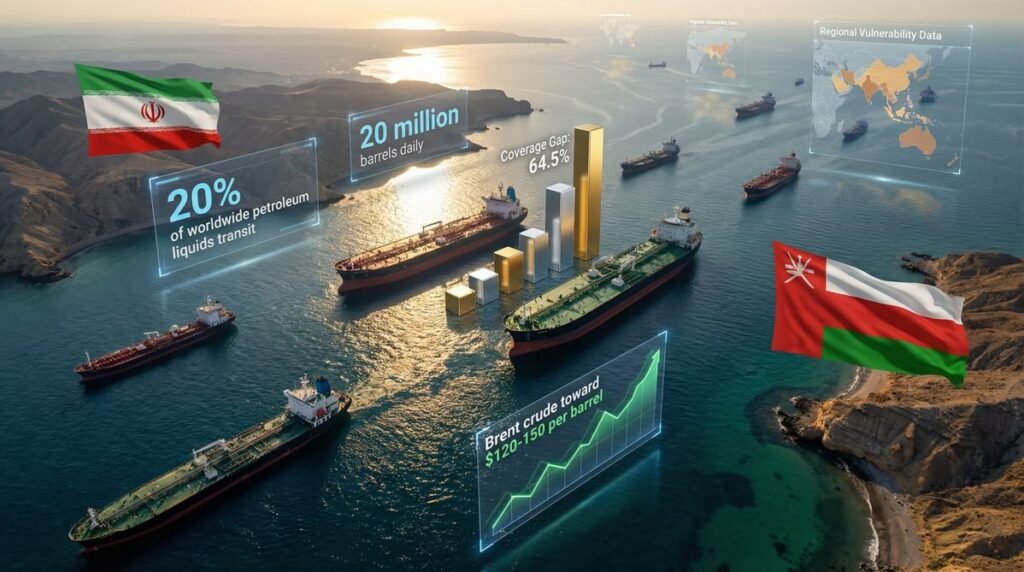
Iran has a unique geographic position.
The country sits beside the Persian Gulf and near the Strait of Hormuz. This narrow waterway connects the Persian Gulf with the Gulf of Oman and the wider Arabian Sea.
As a result, Iran is close to major oil and gas producers and important international shipping routes.
This location gives Iran strategic importance even when there is no war.
Furthermore, any serious military crisis involving Iran can create concerns about shipping safety.
Therefore, the global energy market pays close attention to developments involving Tehran.
Iran as an Energy Producer
Iran has some of the world’s largest proven oil and natural gas reserves.
The country has produced and exported oil for decades. However, international sanctions have affected its access to markets, finance, technology, and investment.
Despite those restrictions, Iran has remained an important energy producer.
Its oil exports can also change according to sanctions enforcement, market conditions, diplomatic relations, and production capacity.
Consequently, energy analysts often watch Iranian export levels when assessing global supply.
Oil Is Not the Only Issue
Although oil receives the most attention, natural gas also matters.
Iran has large natural gas resources and significant domestic demand.
The country uses much of its gas internally for electricity, heating, industry, and other needs.
Therefore, Iran’s gas position is different from its oil position.
At the same time, regional instability can affect gas markets indirectly because oil and gas infrastructure often share transportation, security, and investment risks.
The Strait of Hormuz
Why the Strait Is Important
The Strait of Hormuz is one of the most important energy chokepoints in the world.
Large amounts of crude oil, petroleum products, and liquefied natural gas move through the waterway.
Therefore, any threat to the Strait can create global concern.
The issue is not only whether Iran physically closes the waterway.
Even a serious threat to shipping could increase insurance costs, delay vessels, and encourage companies to take additional security measures.
Consequently, energy prices can react to perceived risk.
Iran’s Strategic Position
Iran controls the northern side of the Strait of Hormuz.
That geographic position gives Tehran significant strategic importance.
Iran has also developed naval forces, missiles, drones, and other systems that could potentially threaten shipping during a major conflict.
However, disrupting the Strait would also have serious consequences for Iran.
Iran depends on the region for its own trade and energy exports.
Therefore, a prolonged disruption could hurt the Iranian economy as well as other countries.
The Global Effect
The Strait matters because the world energy system is interconnected.
If oil shipments become uncertain, buyers may compete for alternative supplies.
That competition can raise prices.
Higher oil prices can then increase transportation costs.
Airlines may pay more for fuel.
Factories may face higher energy bills.
Food transportation can become more expensive.
Therefore, a regional security crisis can eventually reach consumers in countries that have no direct involvement in the conflict.
Iran News: Israel-Iran War Factors
The Long Rivalry
Iran and Israel have been strategic rivals for decades.
Their conflict has involved military activity, intelligence operations, cyber operations, regional armed groups, and attacks on Iranian or Iran linked targets.
For many years, the two countries largely avoided sustained direct warfare.
However, that pattern changed during 2024 and 2025.
Direct Attacks in 2024
In April 2024, Iran launched a large attack against Israel involving drones and missiles.
The attack followed an Israeli strike on an Iranian diplomatic compound in Damascus that killed senior Iranian commanders.
Israel and its partners intercepted most of the incoming weapons.
Israel later carried out a limited response inside Iran.
Then, in October 2024, Iran launched another major missile attack against Israel.
Israel responded with strikes against Iranian military targets.
These events were important because they demonstrated that the conflict could move from indirect confrontation to direct attacks.
The June 2025 Conflict
The most serious direct confrontation occurred in June 2025.
Israel launched a major operation against Iranian military and nuclear related targets.
Iran responded with missile attacks against Israel.
The conflict lasted around twelve days and created serious fears about regional escalation.
During the conflict, the United States also became directly involved.
US Strikes on Iranian Nuclear Sites
On June 22, 2025, the United States struck Iranian nuclear sites at Fordow, Natanz, and Isfahan.
Washington said the operation was designed to damage Iran’s nuclear capabilities.
Iran condemned the strikes.
Tehran later launched missiles toward Al Udeid Air Base in Qatar, where American forces are stationed.
The confrontation then moved toward a ceasefire.
A ceasefire was announced on June 24, 2025.
Nevertheless, the deeper political and security disputes remained.
Iran News: How War Affects Oil Markets
Fear Can Move Prices
Oil markets react to both supply and expectations.
If a war actually removes millions of barrels from the market, the supply shock can be significant.
However, prices can also rise because traders fear that such a disruption might happen.
For example, if shipping through the Gulf becomes dangerous, traders may expect future supply problems.
They can then bid prices higher.
Therefore, war risk can affect energy prices before any major physical shortage occurs.
Supply Disruption
A direct attack on oil fields, refineries, pipelines, ports, or tankers could reduce supply.
Even a temporary disruption can create uncertainty.
Markets may then look for alternative producers.
Saudi Arabia, the United Arab Emirates, Iraq, the United States, and other producers could become more important during such a period.
However, alternative production cannot always replace lost supply immediately.
Spare Production Capacity
One important question during an energy crisis is how much additional production other countries can provide.
If major producers have spare capacity, they may be able to increase output.
That can reduce some of the pressure.
However, spare capacity is not unlimited.
Furthermore, transportation and refinery capacity can also become bottlenecks.
Therefore, replacing lost Iranian or Gulf supplies may be more difficult than simply increasing production.
Iran News: Iran’s Oil Exports
The Role of Sanctions
Iran’s oil exports have been heavily affected by international sanctions.
The United States has used sanctions to pressure Tehran over its nuclear program, regional activities, and other security concerns.
These measures can limit Iran’s ability to sell oil openly through traditional international channels.
Nevertheless, Iran has continued to export oil through various commercial arrangements.
The exact volume can change over time.
Therefore, current export figures should always be checked against recent energy data.
China and Iranian Oil
China has been a major destination for Iranian oil.
Trade between Iran and China has continued despite American sanctions.
This relationship matters because it provides Iran with an important source of energy revenue.
It also creates a geopolitical issue between Washington and Beijing.
The United States wants sanctions to pressure Iran.
China has its own energy needs and foreign policy interests.
Therefore, Iranian oil is not only an energy issue. It is also part of wider international competition.
Sanctions and Global Supply
Sanctions can reduce Iran’s ability to produce and sell oil.
However, they can also affect global supply.
If sanctions are tightened significantly, Iranian exports could fall.
If sanctions are relaxed through diplomacy, more Iranian oil could potentially enter global markets.
That means nuclear negotiations can have an energy effect.
A political agreement could therefore influence oil supply as well as regional security.
Natural Gas and Iran
Iran’s Large Gas Resources
Iran possesses enormous natural gas resources.
However, producing gas is not the same as exporting gas.
Iran has high domestic demand.
The country also faces restrictions on foreign investment and advanced technology.
As a result, much of Iran’s gas production is consumed domestically.
Regional Gas Politics
Iran’s gas position still matters to neighboring countries.
Iran has energy relationships with regional states, although these can be affected by sanctions, infrastructure, and political disagreements.
Gas pipelines require long term investment and security.
Therefore, regional instability can make major gas projects more difficult.
Global LNG Markets
Liquefied natural gas has become increasingly important in global energy trade.
However, Iran has not developed an LNG export industry on the scale of major producers such as Qatar or the United States.
Even so, a war involving Iran could affect LNG markets indirectly.
For example, a wider Gulf crisis could raise shipping costs or create concerns about supply from nearby producers.
Therefore, the effect would not be limited to Iranian gas.
Iran News: How Readers Should Understand Energy Headlines
Do Not Confuse Price Movement With Supply Loss
Oil prices can rise even when global supply has not yet fallen.
Markets price future expectations.
Therefore, a sudden price increase does not automatically mean that millions of barrels have disappeared.
Check Reliable Energy Data
Readers should look for information from established energy agencies, market reports, government data, and reputable financial news organizations.
Social media estimates should be treated carefully.
Watch the Full Picture
One tanker incident does not automatically mean a global energy crisis.
Likewise, one diplomatic statement does not automatically mean permanent peace.
Energy markets depend on many factors, including production, inventories, demand, shipping, sanctions, currency movements, and economic growth.
Therefore, context is essential.
Iran News: The Future of Iran and Global Energy
Iran’s Potential Role
Iran could become even more important to global energy markets if international restrictions are reduced.
The country has large reserves and significant production potential.
However, increasing output would require investment, technology, infrastructure, and stable markets.
Therefore, political normalization could have long term energy effects.
Energy Investment
International energy companies need predictable conditions.
Sanctions, war risk, and political uncertainty can discourage investment.
If regional tensions decline, Iran and other Middle Eastern countries could attract more investment.
This could improve production capacity over time.
The Energy Transition
The global energy system is also changing.
Countries are investing in solar power, wind energy, electric vehicles, batteries, and other technologies.
However, oil and gas remain major parts of the world economy.
Therefore, Middle Eastern energy security will remain important for years, even as renewable energy grows.
Conclusion
Iran matters because it is a major energy producer, sits near the Strait of Hormuz, has powerful military capabilities, and maintains important relationships across the Middle East.
The direct Iran-Israel confrontations of 2024 and 2025 demonstrated the risks of escalation. The June 2025 conflict also showed the possibility of direct American involvement. Although a ceasefire reduced the immediate danger, the underlying nuclear, military, and political disputes remain important.
About The Author
